
Digital Trends in Wind Energy 2026-2030
(see all)
Sample preview:
Questions answered
- How large is the global wind turbine market, and how is it expected to develop through 2030?
- Who are the leading wind turbine OEMs by value and by installations?
- How do Chinese OEMs use digital features to enter Europe, and how are European buyers and regulators responding?
- Which independent digital suppliers compete in controls, condition monitoring, O&M software, forecasting and OT security?
- Which drivers are expected to expand demand for automation and digital solutions in wind through 2030?
- Which technology trends are changing turbine monitoring, data and AI, control and cybersecurity?
- How do NIS2, the CRA and the EU Data Act change responsibilities for OT security and turbine data?
- What should automation and digital vendors and wind operators do in response?
Table of Contents
Digital Trends in Wind Energy 2026-2030 (PDF)
- Executive summary
- Executive summary (2 parts)
- Background: The wind energy market landscape
- Chapter overview and key takeaways
- The wind turbine market: Market size and forecast
- The wind turbine market: Market size by segment
- The wind turbine market: Installations by country
- The wind turbine market: Leading OEMs
- Competitive dynamics: Chinese OEMs’ digital strategies abroad
- Strategies 1 and 2: Certification and data sovereignty
- Strategy 3: AI and digital features bundled into the turbine
- Response: Europe’s security barriers and China’s local-content rules
- Competitive digital landscape in wind energy
- Drivers of demand for automation and digital in wind
- What we heard at WindEnergy Hamburg
- Technology trends overview
- Overview of the 9 trends
- Condition monitoring and smart maintenance
- Trend 1, Trend 2, Trend 3
- Data, AI and software
- Trend 4 (2 parts), Trend 5 (2 parts), Trend 6
- Control, edge and cybersecurity
- Trend 7 (2 parts), Trend 8, Trend 9
- Strategic outlook and implications
- Recommendations for digital solution vendors and wind farm operators
- Appendix: Research methodology
- Research methodology
- About IoT Analytics
- About IoT Analytics
- Other publications by IoT Analytics
About the report
The Digital Trends in Wind Energy 2026-2030 identifies 9 automation and digital trends in wind energy across condition monitoring and maintenance; data, AI and software; and control, edge and cybersecurity. It shows where digital opportunities are emerging, which 9 drivers expand demand for automation and digital solutions through 2030, and which digital suppliers compete. The 46-page report was published in November 2026 and draws on conversations at WindEnergy Hamburg 2026.
Key data
- Coverage: 9 automation and digital trends and 9 demand drivers through 2030
- Aging fleets: about 86 GW of Europe’s wind fleet turns 20 by 2030; about 10,400 German turbines were already older than 20 at the end of 2025
- OT security: fewer than 5% of wind turbines have OT security monitoring, according to Centrii
- Companies featured include: Bachmann electronic, ONYX Insight, Aviva, Centrii, Enercon, Siemens Energy, EnBW, Vattenfall, Yokogawa and BaxEnergy
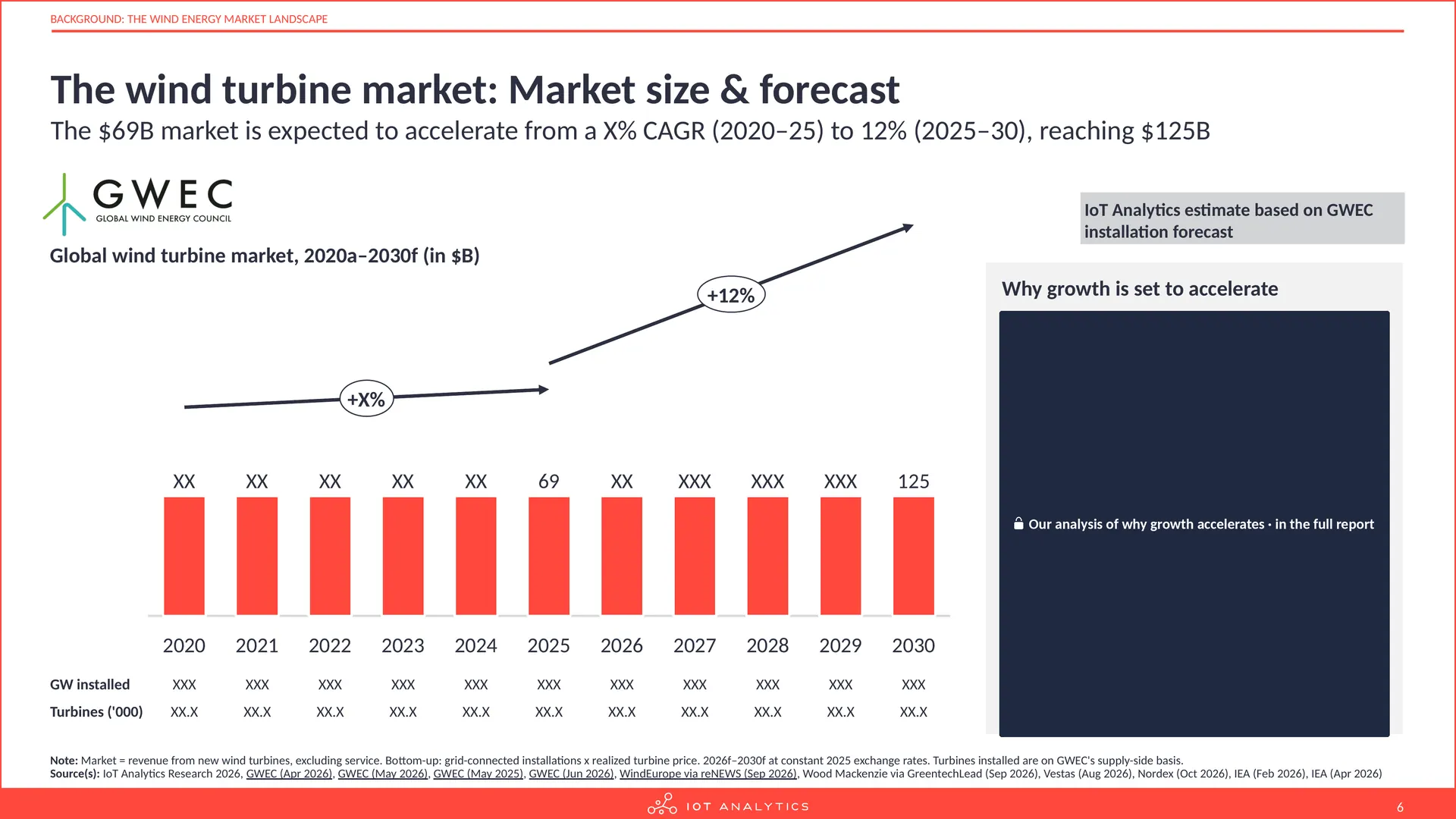
- Market context: the wind turbine market is expected to grow from $69 billion in 2025 to $125 billion in 2030 (12% a year)
Monitoring is wind’s most immediate digital opportunity
Not all digital demand in wind comes from new turbines. Two of the 9 demand drivers in the report apply to turbines already in operation: aging fleets nearing end of life and tightening cyber regulation. Both call for monitoring, of the machine and of the network.
3 of the 9 wind energy trends in brief
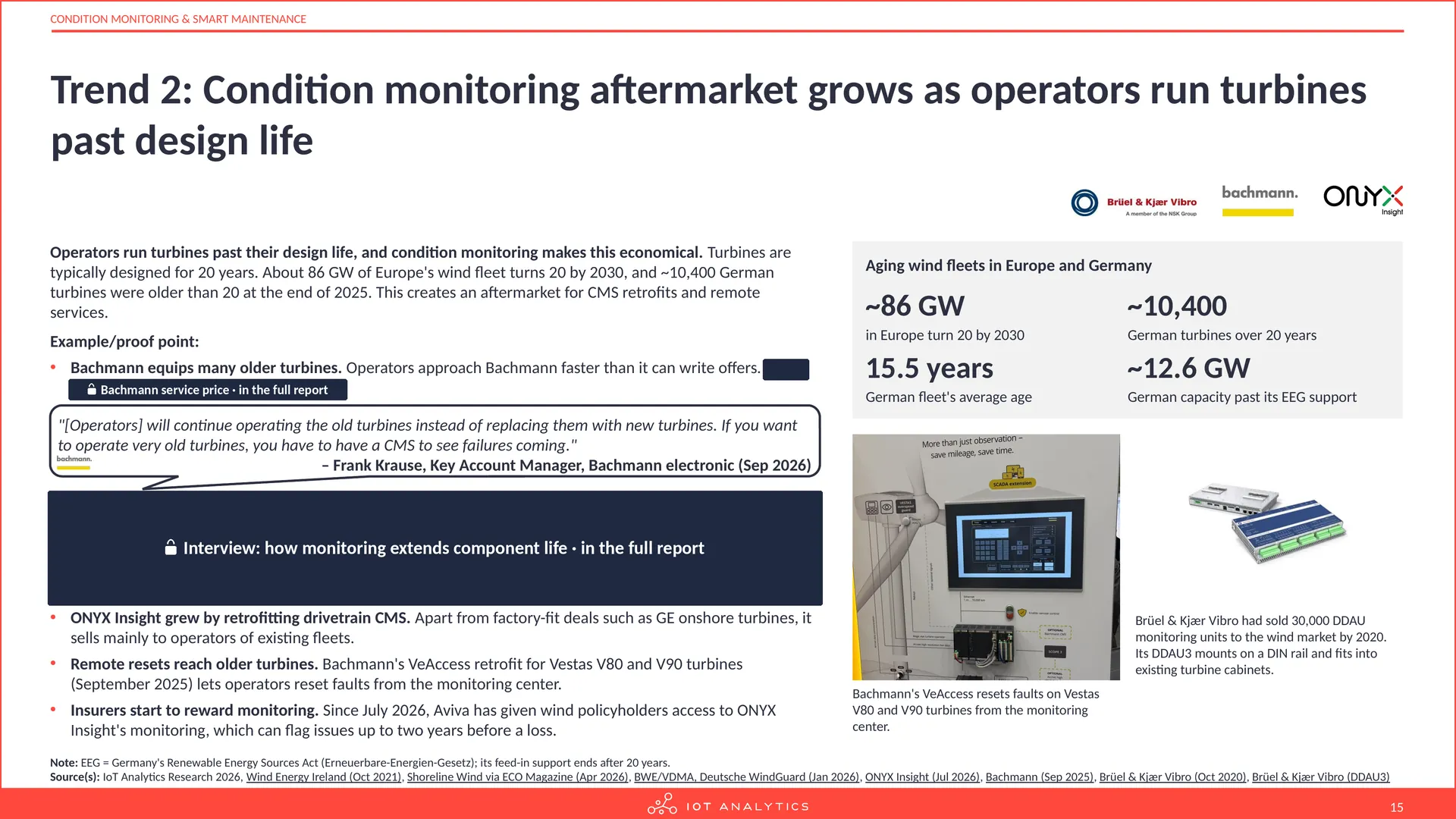
Condition monitoring aftermarket grows as operators run turbines past design life
Turbines are typically designed for 20 years, and operators keep them running longer. Condition monitoring systems (CMS) make this economical. Vendors and insurers are moving into the aftermarket: Bachmann electronic equips many older turbines with monitoring, and since July 2026 the insurer Aviva has given wind policyholders access to monitoring from ONYX Insight.
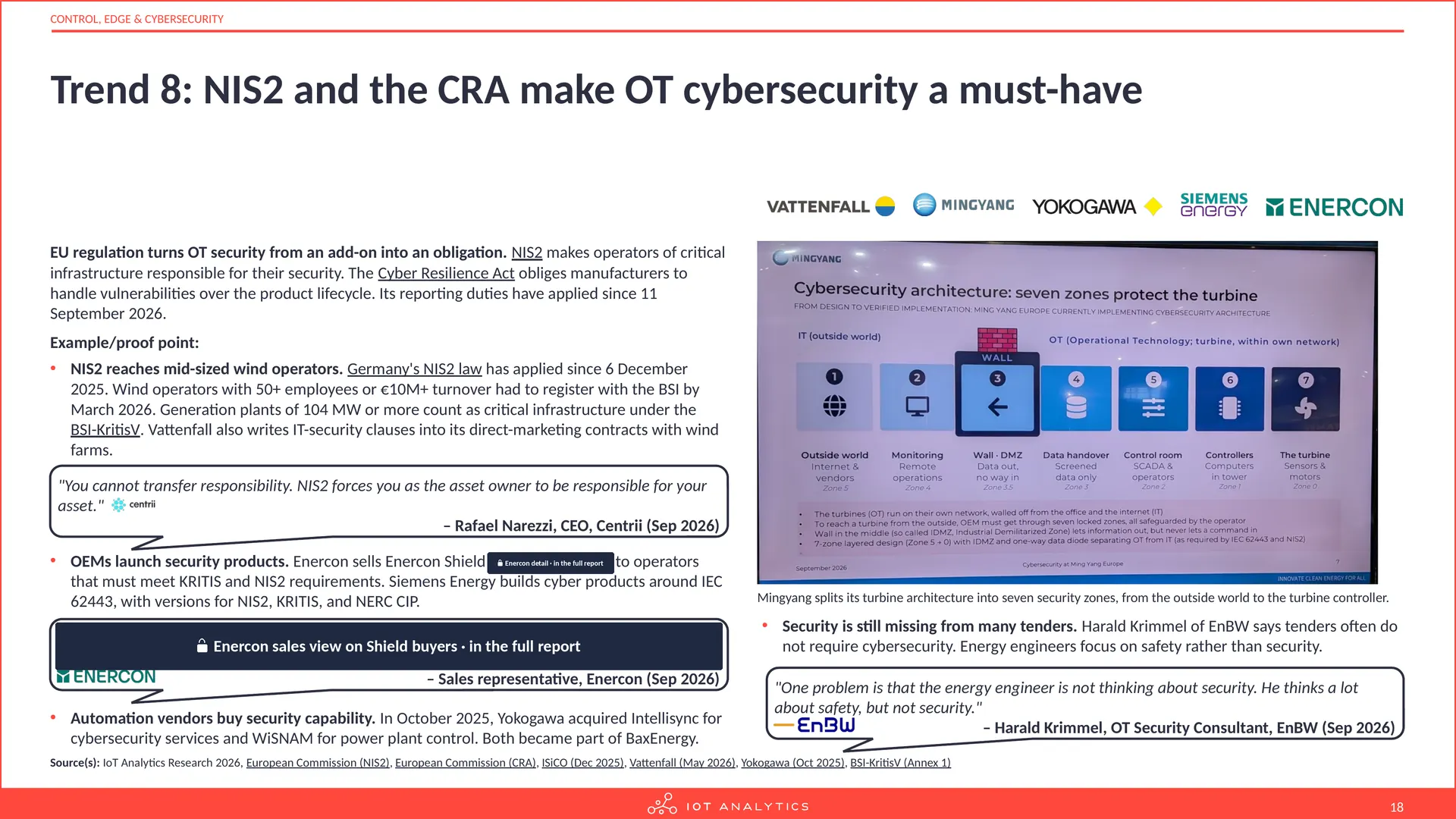
NIS2 and the CRA make OT cybersecurity a must-have
NIS2 makes wind operators, including mid-sized ones, responsible for the security of their assets; Germany’s NIS2 law has applied since December 6, 2025. The Cyber Resilience Act (CRA) obliges manufacturers to handle vulnerabilities over the product lifecycle, with reporting duties since September 11, 2026. Turbine OEMs such as Enercon and Siemens Energy now sell security products to operators.
OT security shifts from perimeter air-gapping to deep passive monitoring
Wind farms are remote, unmanned and connected to the internet, so air gaps no longer protect them. On December 29, 2025, attackers damaged controllers at more than 30 Polish wind and solar farms, according to CERT Polska. OT security vendors such as Centrii place passive sensors in the turbine cabinet to read network traffic down to the inverter level.
What the report covers
- 9 automation and digital trends in condition monitoring and maintenance; data, AI and software; and control, edge and cybersecurity
- 9 drivers of demand for automation and digital solutions through 2030
- The competitive landscape of digital suppliers in wind energy
- The strategies Chinese turbine OEMs use in Europe
- Quotes from conversations at WindEnergy Hamburg 2026
- Recommendations for automation and digital vendors and for wind farm operators
- Market context: the global wind turbine market 2020–2030, onshore and offshore, installations by country and the leading turbine OEMs
Market data set (Enterprise licence)
Enterprise licences include the market data set (XLSX) behind the report: the wind turbine market 2020–2030, installations and turbines, the onshore and offshore split, installations and installed base by country, the top 10 OEMs, and the digital vendor landscape with each supplier’s headquarters.
Research base
The findings draw on primary research, including conversations at WindEnergy Hamburg 2026 (22–25 September 2026) with turbine OEMs, automation and drive vendors, software and OT security vendors, and wind farm operators. They are complemented by company filings, GWEC installation data and other secondary sources.
Who it’s for
- Automation and digital vendors: demand for retrofit monitoring and OT security comes from the installed base, not only from new turbines.
- Wind farm operators: monitoring helps extend turbine life and meet NIS2 duties, which owners cannot pass on to suppliers.
- Consultants and investors following digital technology in wind energy.
Related reading
Related research articles based on this report will be published soon.
→Sign up for the newsletter to be notified of future updates
Our insights are trusted by global industry leaders


Single User License
- 1 named user within a particular department and country
- Complete trend report in PDF
- Complete trend report in PPTX
- Market data set in XLSX
- 1 hour discussion with the analyst team
Team User License
- 1–5 named users within a particular department and country
- Complete trend report in PDF
- Complete trend report in PPTX
- Market data set in XLSX
- 1 hour discussion with the analyst team
Enterprise Premium License
- Unlimited users within a particular business division globally
- Complete trend report in PDF
- Complete trend report in PPTX
- Market data set in XLSX
- 1 hour discussion with the analyst team
See Terms & Conditions for license details →
*The subscription is valid for 12 months upon date of purchase.
Get your free sample
Any questions?
Get in touch with us easily. We are happy to help!

Prajwal Praveen
Sales Manager
Phone: +49 (0) 408 221 1722
Email: sales@iot-analytics.com