In short
- Germany and Japan flipped from contraction to expansion in 2026, with August PMIs of 54.3 and 54.9 (Germany briefly above the US).
- Computer & electronics and machinery lead order growth, driven by AI infrastructure (US), domestic spending (Germany), and semiconductor rebuilding (Japan).
- The upturn is thin: Motor vehicle orders lag in Germany and Japan due to competition from China, 15 of 49 economies still contract, and US factory construction is cooling.
- High energy costs pose the main risk to the upturn, especially for German industry, while manufacturing hiring gaps point to rising demand for automation.
In this article
- Global macroeconomic overview
- Japan and Germany move from contraction to expansion, with Germany momentarily overtaking US Manufacturing PMI in August 2026
- Electronics and machinery drive the orders
- Where the upturn is thin
- What to watch
- Further analysis
- 6 macro themes to watch, and how they affect enterprise technology markets (Insights+ Exclusive)
- Industrial automation lead times (Insights+ Exclusive)
Global macroeconomic overview
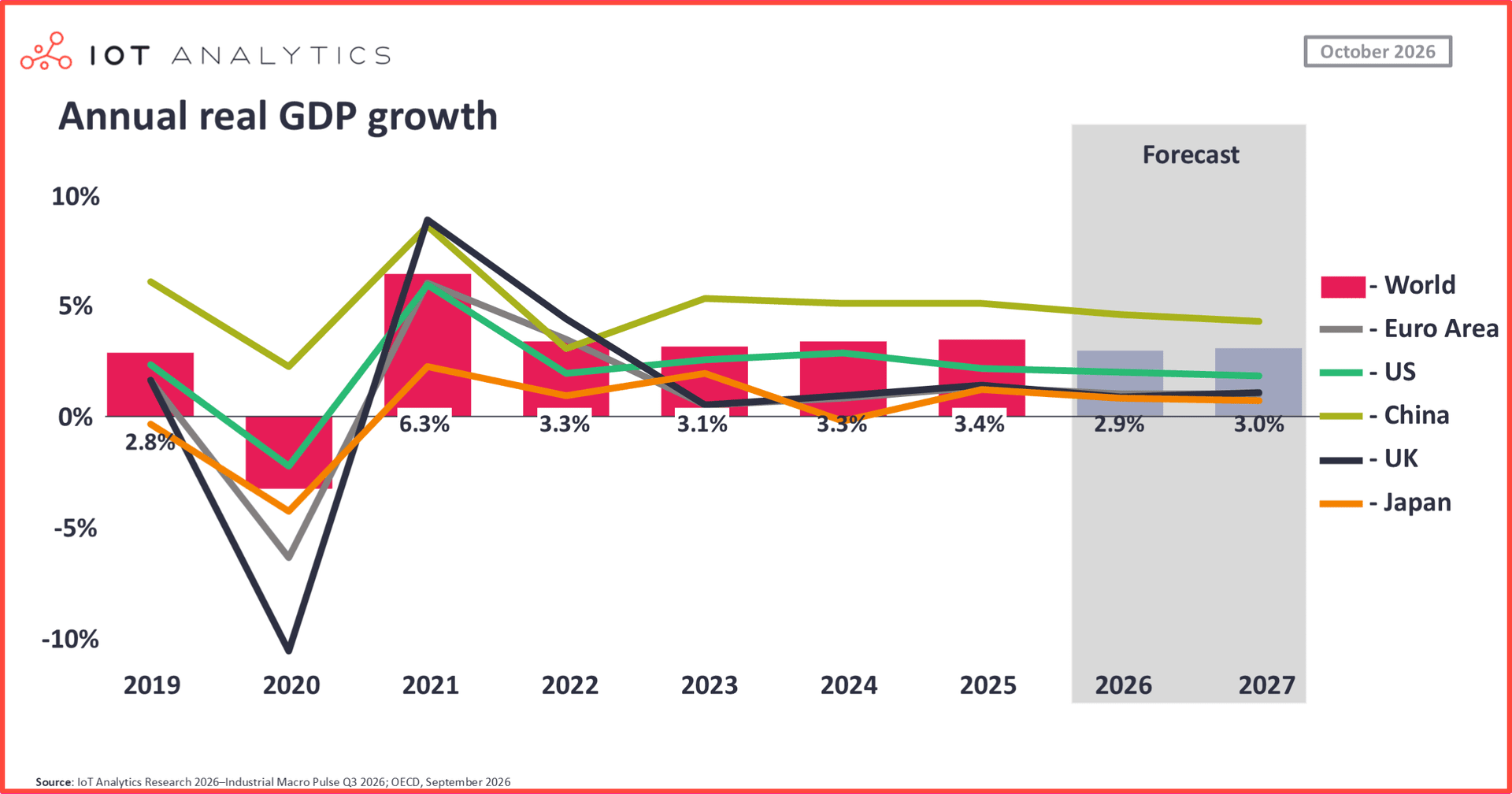
Global growth holding steady at a slow pace versus 2025, while manufacturing expands. As covered in our latest Industrial Macro Pulse Q3 2026 update (published September 2026), the OECD forecasts world GDP growth of 2.9% in 2026 and 3.0% in 2027. Compared to 2025, this represents a slowdown from 3.5%. Per the latest OECD quarterly update, adjustments to the global growth forecast held steady at +/- 0.1 pp. Energy costs remain high, as conflict in the Persian Gulf has kept traffic through the Strait of Hormuz far below pre-war levels, and Brent crude reached about $131 per barrel in mid-September.
However, throughout 2026, most of the world has seen manufacturing expansion, with global PMI above 50 since January. Some of the strongest gains came from economies that contracted in 2025, including Germany and Japan. Order data from Germany and Japan show 2 sectors driving the upturn: computers & electronics and machinery.
Insights from this article are derived from
Industrial Macro Pulse Q3 2026
Quarterly analysis of macroeconomic developments, industrial demand signals, and implications for industrial technology markets.
Already a subscriber? View your reports and trackers here →
Japan and Germany move from contraction to expansion, with Germany momentarily overtaking US Manufacturing PMI in August 2026
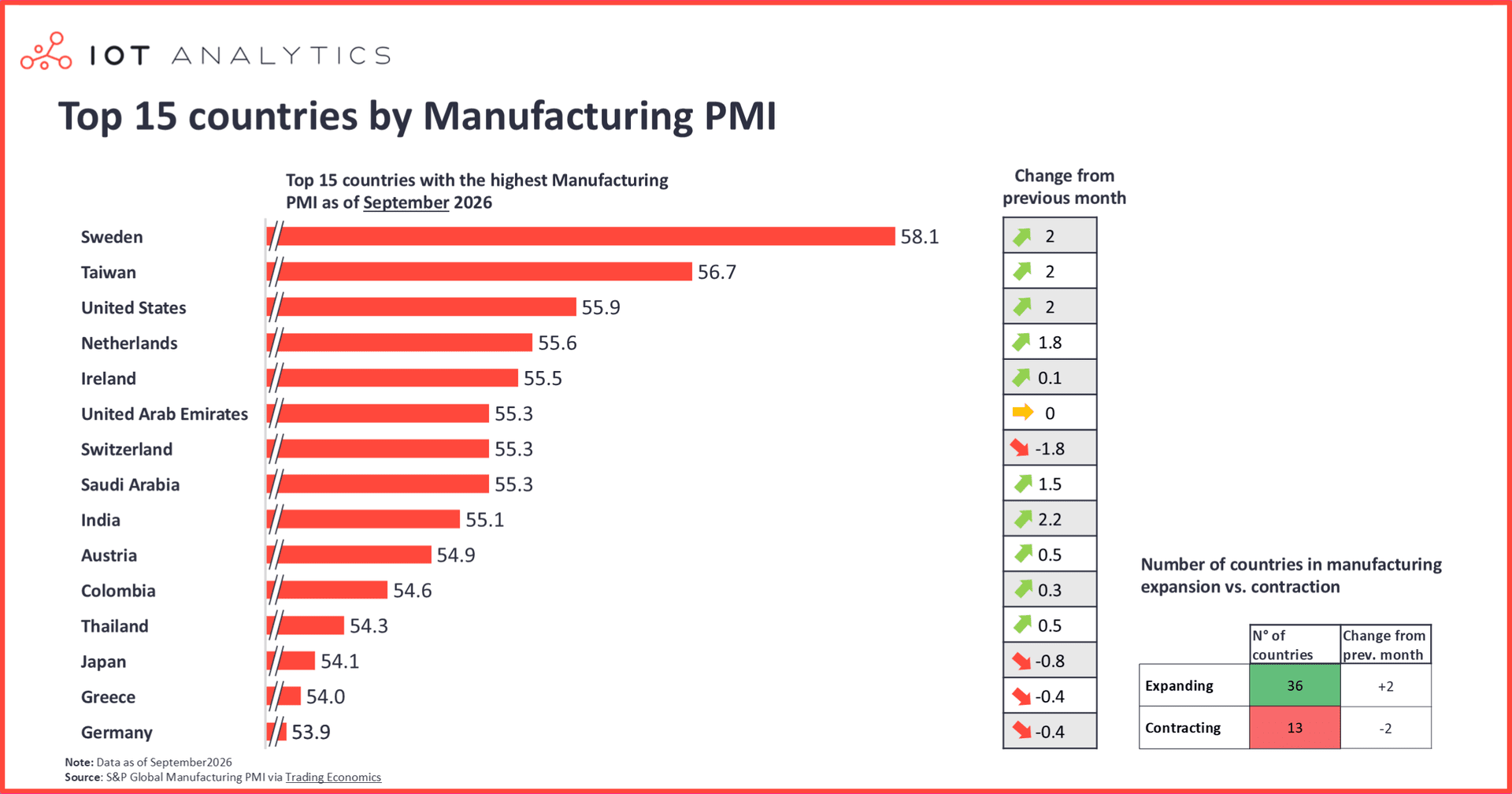
Manufacturing activity rebounded across Japan and Europe. A manufacturing PMI above 50 signals expansion, and a reading below 50 signals contraction. Japan and Germany both spent the second half of 2025 below that line. However, that changed in early 2026.
Japan has expanded every month of 2026, reaching 54.9 in August (1 of the 5 highest readings among the 49 tracked economies) and 54.1 in September. Meanwhile, Germany has expanded every month since February, reaching 54.3 in August (even surpassing the US that month) and 53.9 in September. S&P Global reported that February marked Germany’s first expansion in more than 3.5 years.
Germany’s recovery is part of a wider shift in Europe. The Euro Area has also expanded every month since February, reaching 52.7 in August. 8 of the 15 highest manufacturing PMIs in August came from European economies, with Switzerland, Sweden, and Ireland holding the top 3 spots.
Electronics and machinery drive the orders
Computer and electronics and machinery led order growth in both the US and Germany, and electronics manufacturers in Japan placed more machinery orders. In the US, computer and electronics orders grew 15% year-over-year (YoY) in Q2 2026, and machinery orders grew 14% YoY. Orders rose in every sector IoT Analytics tracks, and we attribute the electronics rebound to demand for AI infrastructure. Hyperscalers are expected to spend $725B on CapEx in 2026, up 77% from 2025.
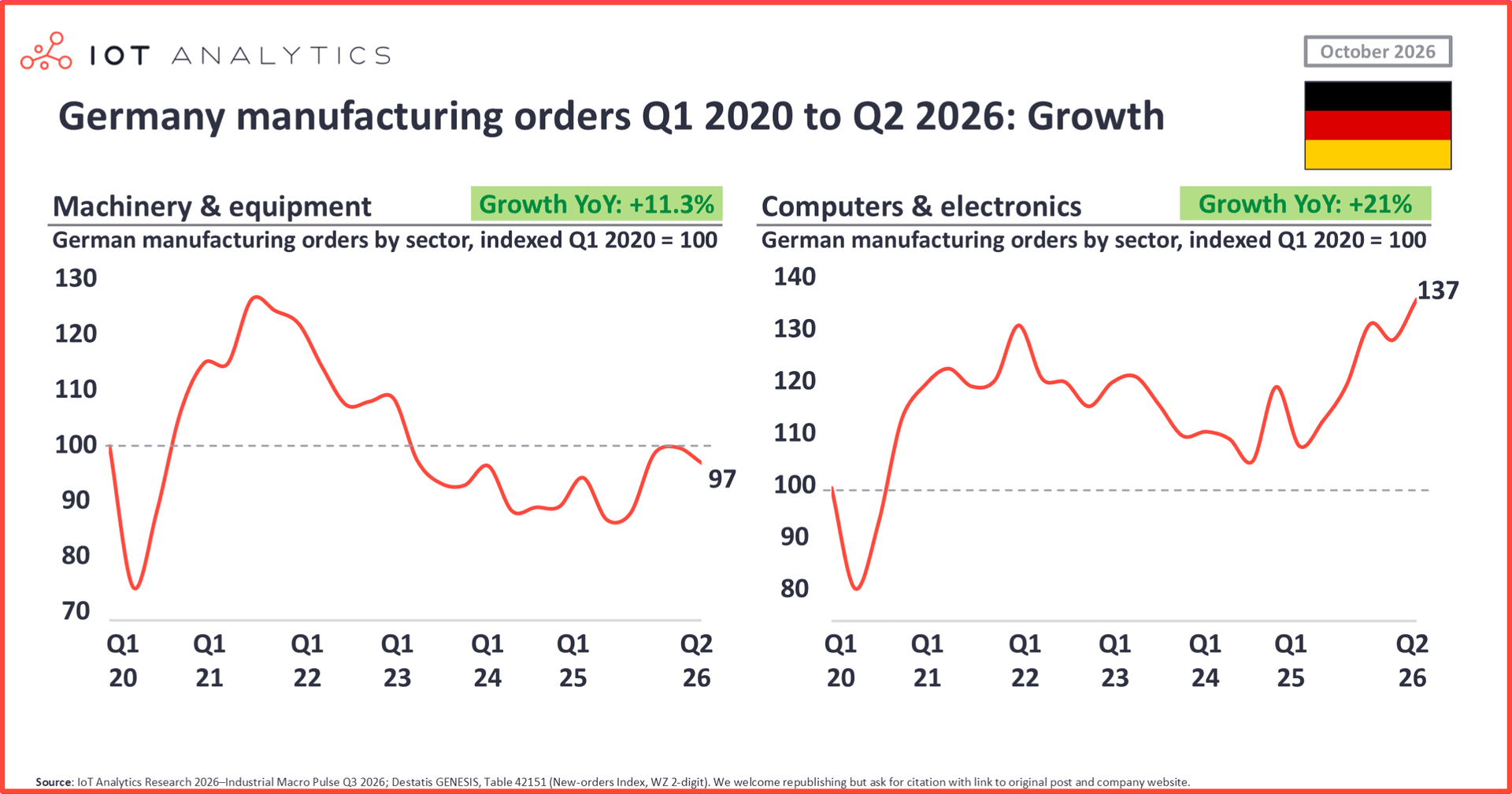
In Germany (shown below), computer and electronics orders rose 21% YoY, and machinery and equipment orders rose 11% YoY, both recovering from a long post-pandemic decline. The AI link is weaker here. We see domestic spending as the more likely driver, including defense procurement and the government’s €500B infrastructure fund.
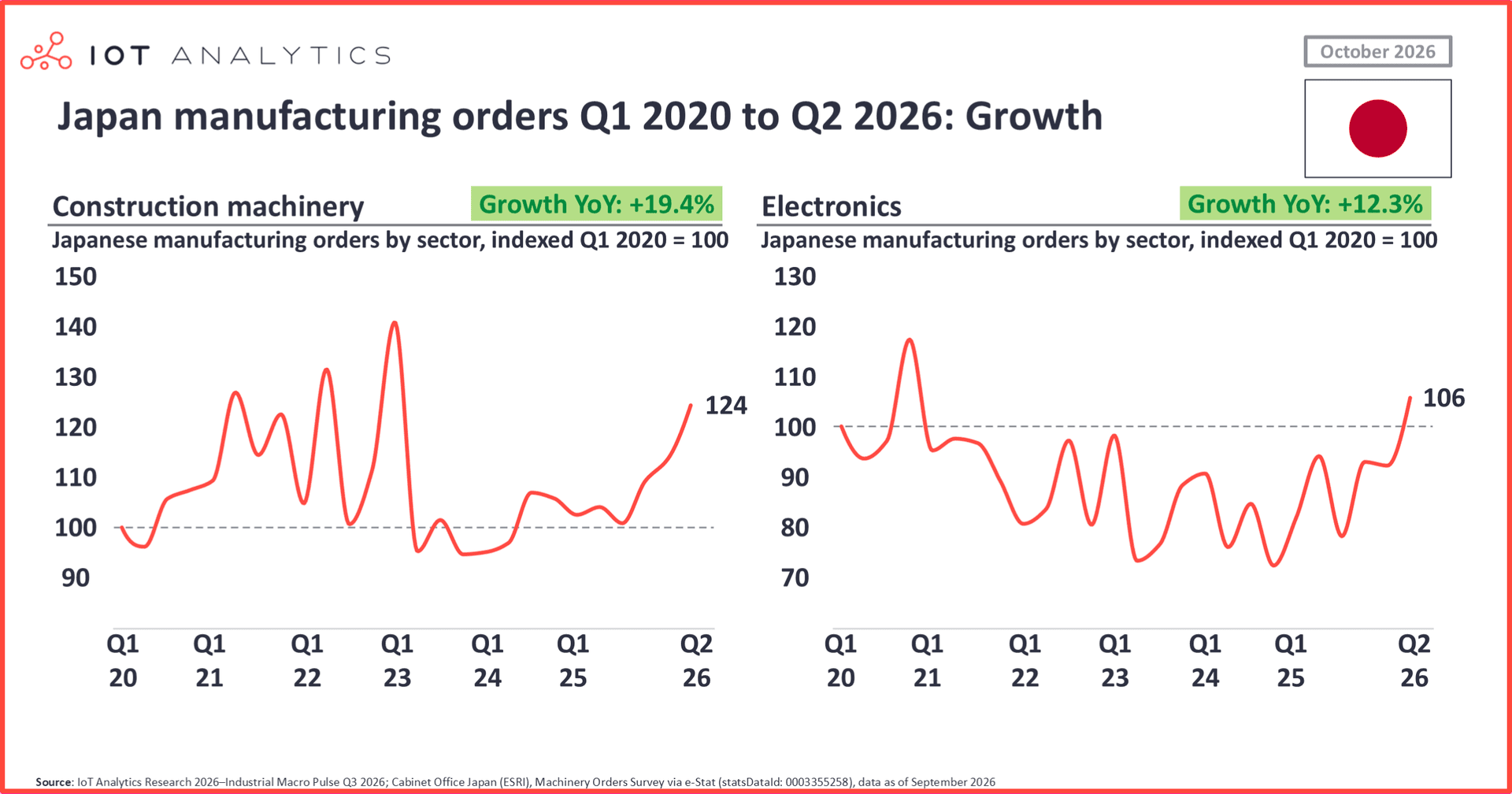
In Japan (shown below), machinery orders placed by electronics manufacturers grew 12% YoY, supported by the country’s effort to rebuild its semiconductor industry. Machinery orders placed by construction companies grew 19% YoY on the back of public infrastructure spending, though the category has a history of sharp swings.
Industrial equipment demand strengthened amid growing automation investment. Across all 3 countries, machinery orders point to sustained investment in industrial equipment. US-based engineered bearings and industrial motion company Timken CEO Lucian Boldea tied this to labor shortages and onshoring, which push manufacturers toward automation. Our lead time tracker, shared in the Industrial Macro Pulse Q3 2026 report, shows the same demand building: PLC lead times rose by 2 weeks since Q1 2026, now to 5 to 6 weeks.
Where the upturn is thin
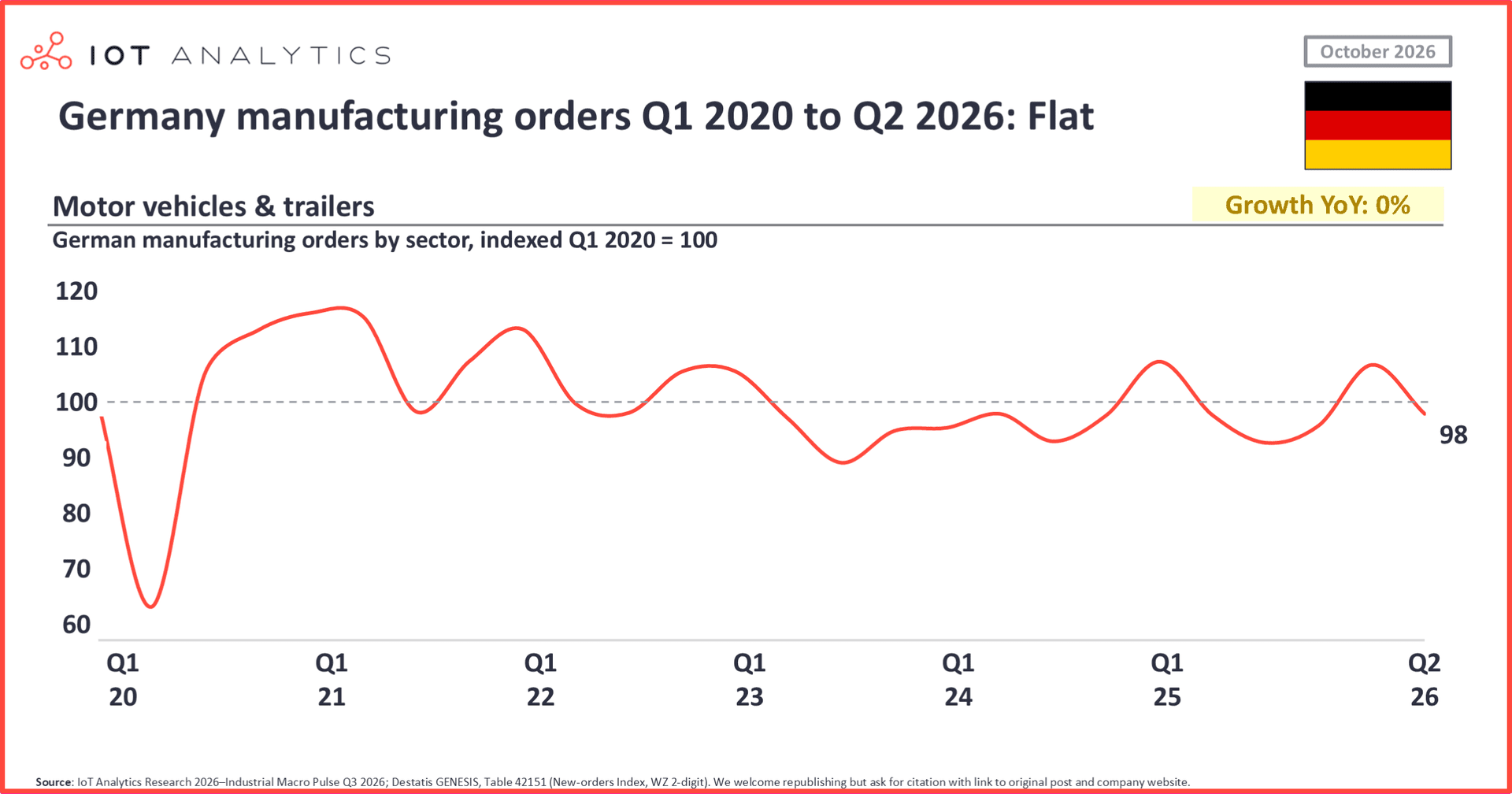
Chinese competition weighing on German and Japanese automotive orders. In Germany, vehicle orders have been flat and moving sideways since 2021, a pattern we assess as linked to Chinese competition eroding market share.
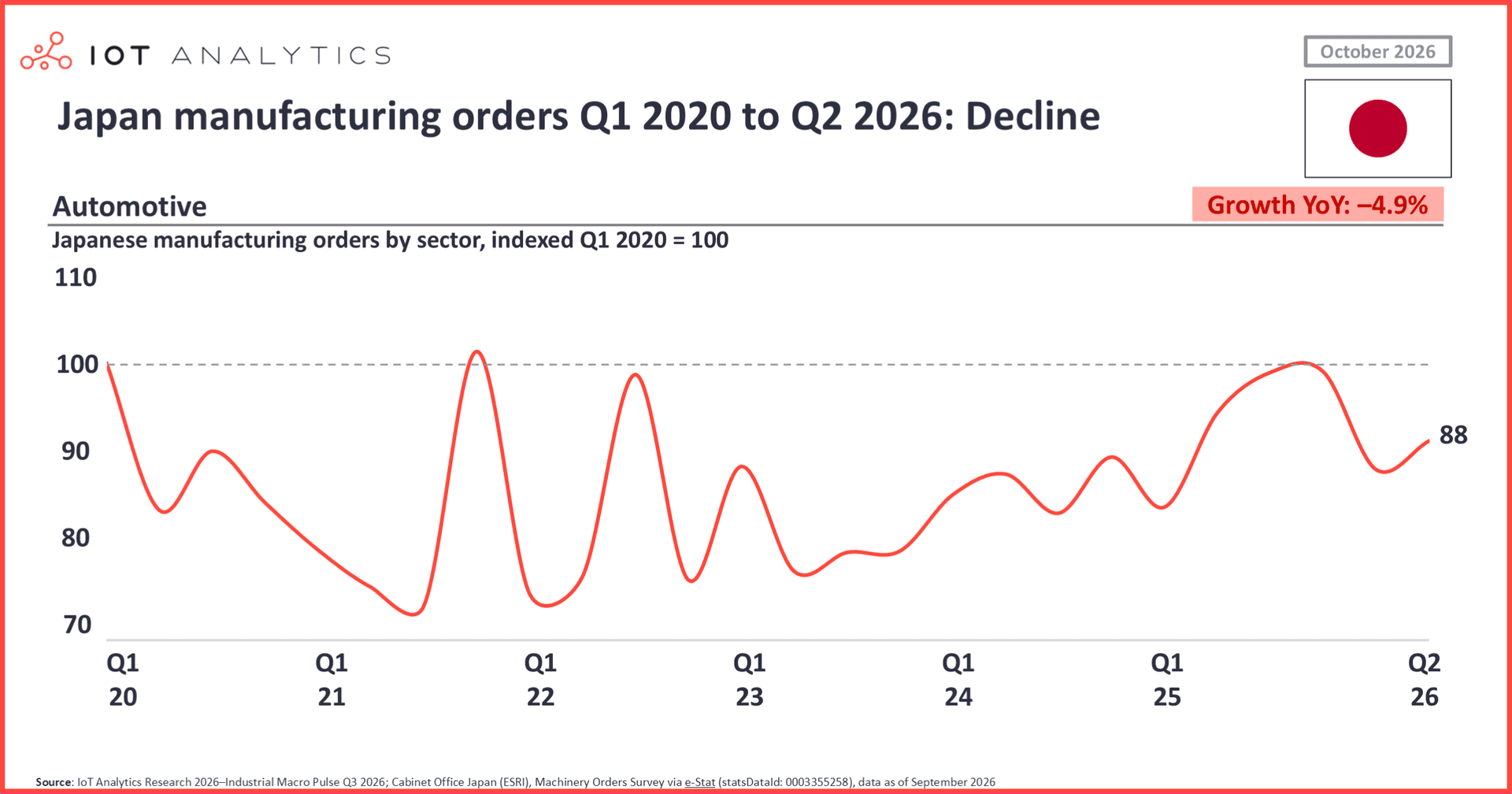
In Japan, motor vehicle orders fell 5% as US tariffs and competition from Chinese electric vehicles weighed on the sector.
Recovery also uneven across regions. 15 of 49 tracked economies are still contracting, including Brazil at 46.3, Turkey at 48.1, and Mexico at 49.8. Further, 5 fewer economies were expanding in August than in July.
US construction investment shifted from manufacturing toward AI infrastructure. The factory build-out that followed 2022 in the US is cooling from its peak. Manufacturing construction spending fell 22% year over year in July, and spending on electronics plants fell 47%. Data center construction rose 57% over the same period. Investment is moving toward AI infrastructure and away from new factory capacity.
What to watch
IoT Analytics analyst Joaquin Fernandez performed most of the analysis in the Industrial Macro Pulse Q3 2026 report. In his view, energy and labor will show whether the upturn holds.
Energy – Elevated oil prices threaten Germany’s industrial recovery. US strategic oil reserves have fallen to about 285M barrels, and talks on reopening the Strait of Hormuz have been postponed. Sustained high prices would hit Germany hardest in energy-intensive industries, such as chemicals and metals, where orders sit outside the electronics and machinery growth driving the recovery.
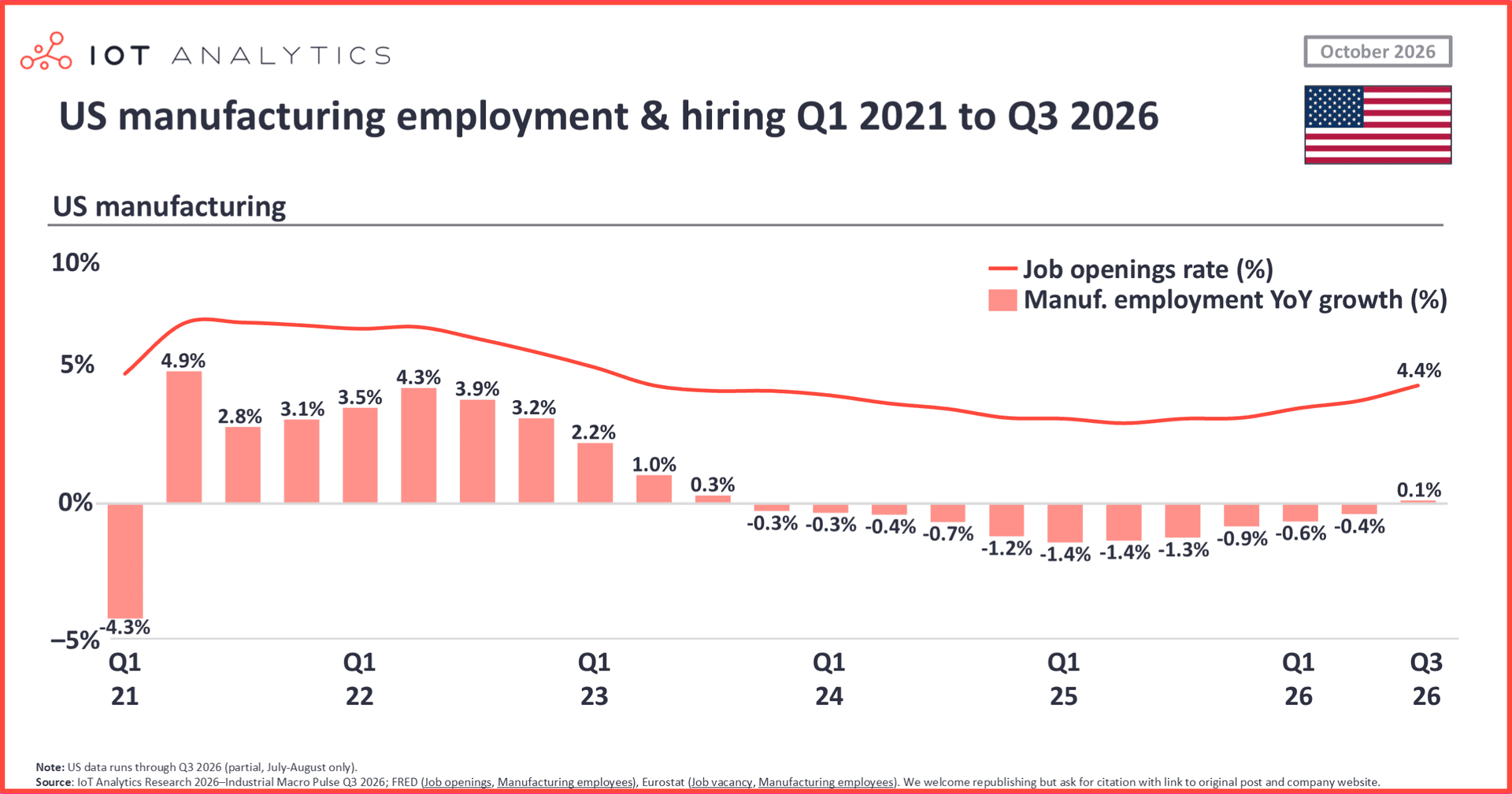
Labor – US manufacturing labor shortages could accelerate automation demand. Manufacturing job openings rate in the US rose from 3.4% in March to 4.4% in July, while manufacturing employment grew just 0.1% YoY. If manufacturers keep failing to fill roles, expect automation orders and component lead times to keep rising into Q4.
Further analysis
Below in our Insights+ section, we share 6 key macro themes to watch and an update on industrial automation lead times.
Access key market data for $99/month per user
The Insights+ Subscription unlocks exclusive facts & figures. You will gain access to:
- Additional analyses derived directly from our reports, databases, and trackers
- An extended version of each research article not available to the public
Full report access not included. For enterprise offerings, please contact sales: sales@iot-analytics.com